
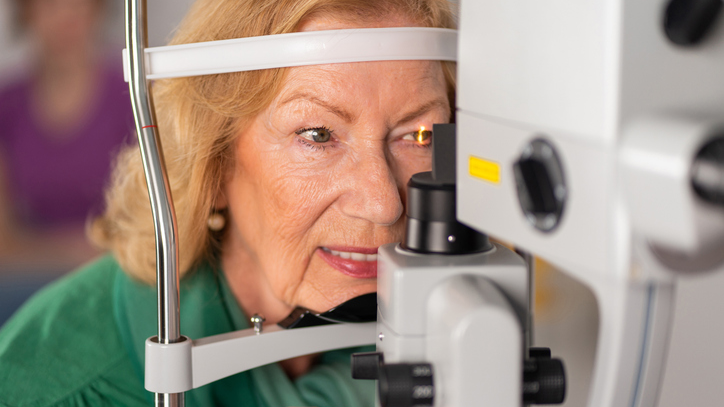
Roughly two million people in the United States have glaucoma and are unaware of their condition. Glaucoma damages the optic nerve, gradually worsening vision and without the right treatment can lead to blindness. The good news is regular exams and other preventative measures can lower chances of eye disease.
Who is at risk of developing glaucoma?
Anyone can get glaucoma, but some groups are at a higher risk including people who:
- Are 60 years and older
- Are of African, Asian, or Hispanic descent
- Have a family history of glaucoma
- Are very nearsighted (myopic) or far-sighted (hyperopic)
- Take steroid medications
- Have high eye pressure
- Have a thin central cornea
- Have experienced an eye injury
How often should I get my eyes checked?
If you are under the age of 40 without any risk factors, the American Academy of Ophthalmology advises a complete eye exam every 5 to 10 years.
Guidance on other ages include:
- 40-54 years old: every 1-2 years
- 55-64 years old: every 1-3 years
- 65 years and older: every 1-2 years
- African Americans (another high-risk group for glaucoma) 40 years and older: every 1-2 years
Ryan Mossey, family nurse practitioner at our Louisiana PACE center, emphasized the importance of routine checkups.
“Because early glaucoma often has no noticeable symptoms, regular eye exams are crucial for catching the disease early and protecting long term vision.”
How do I know if my eye exam will detect glaucoma?
Your eye doctor will screen for glaucoma with an exam that:
- assesses your eye pressure
- evaluates the drainage angle of your eye
- checks your optic nerve for any signs of damage
- measures your peripheral (side) vision
- captures an image or digital scan of your optic nerve
- assesses the thickness of your cornea
For your ophthalmologist to get a thorough view, eye drops to dilate patients’ pupils are necessary. Make sure you talk through everything with your eye doctor to ensure you are on the same page.
What else can I do to prevent glaucoma?
In addition to eye exams, other lifestyle choices help lower your chances for glaucoma such as:
- Practice safety with protective eye wear for sports, yard work, or home projects.
- Avoid positions where your head is down below your heart if you are at risk. This might include yoga or gravity boots for back pain.
- Wear sunglasses and a hat when the sun is out. Make sure your sunglasses are polarized to reduce glare and that they protect against UV rays.
- Eat eye-healthy foods including veggies and fruits rich in Vitamin C and E, zinc, and Omega-3 and Omega-6.
- Exercise regularly but monitor the intensity, as rigorous exercise can lead to increased eye pressure.
Learn more about glaucoma from the National Eye Institute.
Our team coordinates care for each participant, offer a wide range of services including specialty services such as ophthalmology, podiatry, or dental care. Trinity Health PACE’s comprehensive approach cares for each participant in mind, body, and spirit. Learn more about our services and see if you or a loved one qualifies.
*Content is based on information from the Glaucoma Research Foundation, American Academy of Ophthalmology and the National Eye Institute.
Get new insights like this in your inbox
Subscribe for the latest blog posts, practical tips, and updates. Sent occasionally, not daily.